
7 Reasons why Your Solar Lights Not Working & How to Fix Them
 You just bought a solar-powered light, unboxed it, installed it at your preferred location, and noticed that the solar light is not working!
This is a very common scenario for most people using solar lights for the first time.
Another common issue faced by many homeowners is that their solar lights are not as bright as when they were new.
How many times have you come across a situation like this and regretted buying solar lights?
It is definitely an irritating experience, and you want to be done with it. However, in order to do so, you need to understand what exactly the problem is with your solar light and whether it’s really an issue in the first place or just a lack of knowledge about something.
Once you know how solar-powered lights work and the basics of using them, you’ll be better equipped to fix the problem.
There are several possible problems that you need to check before you pinpoint and fix the issue.
In this blog post, we have listed the 7 most common problems and how to fix them, so without further ado, let’s dive into the details. At the end of this article, you will probably be able to fix the most common problems and make your light work as intended.
Looking to buy new solar lights? Check out these Top 10 best solar lights.
1. There Is ON/OFF Button & It’s not turned ON
Most outdoor solar garden lights come with an ON/OFF button, and that button needs to be turned on.
In many cases, this simple thing is ignored by many people, and this is one of the main reasons why your solar light isn’t working as expected. There might also be a factory defect, and the light doesn’t turn on.
2. There Is a Pull Button and You Ignored It
Some solar lights come with a pull button on the battery, and it needs to be removed before you turn on the light. This one is for the newly purchased items only.
So if you just bought a new solar light and it’s not working, you should definitely check this out.
3. Test If the Sensor Is Working or Not
Solar lights don’t work during the daytime. In order to check them during the daytime, you need to simulate darkness. Most solar lights have a little sensor to check darkness.
Make sure you check them during the nighttime or simulate darkness by covering the sensor with your hand, cloth, or something. After covering it, if the light turns on, then it’s fine. If they don’t, then the solar light battery needs to be changed.
4. Make Sure the Solar Panel Is Clean and Working
 After installing the light in your outdoor garden, it tends to get dirty. You will notice reduced lighting duration. Thus, you need to make sure that the panel is clean and doesn’t have dust or anything on it.
For that reason, it’s a good idea to clean your panel every now and then and put it in a safe place when not in use, e.g., during the rainy or winter season.
Dust and other accumulated residues can greatly affect the charging process. They might cover the solar panel and block the sunlight.
5. Ensure Your Solar Light Getting Direct Sunlight

If the solar panel is not getting the required sunlight, then the LED won’t work or won’t produce the brightest light as you would have expected.
Make sure you place your light in a location where it gets direct sunlight. Normally, a solar light should get 4-5 hours of daily direct sunlight to effectively charge the batteries and shine brightly during the night hours.
6. Test the Lights with Alkaline (Regular) Batteries
 Most newly purchased solar lights come with rechargeable batteries.
After their normal lifespan (typically a couple of years), they tend to stop working or start performing poorly. If you see decreased brightness in the light, then it’s time to change the batteries.
But before you buy new rechargeable batteries, test the solar light by using an alkaline battery.
Only use alkaline batteries to test the solar lights. Do not leave them in your lights, because alkaline batteries are not rechargeable.
7. Charge the Batteries for one day
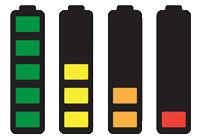 To get the best from your newly purchased solar light, let the batteries fully charge for the first time before switching them on.
Place the light in a proper location. Make sure you switch them off so that they get fully recharged. Wait for 24 hours and start using them.
Last but not least, in case the above-listed fixes do not work for you, feel free to contact the vendor and get it fixed or replaced.
To wrap it up
Most homeowners get exhausted and frustrated wondering why their solar lights are not working at all or are not as bright as they should be.
But before you give up, take the time to go through the steps mentioned above and see what you’re lacking or missing.
Now you know that there are ways to correct them. So get your hands dirty and start fixing your outdoor solar lights.
Check the review section of the site where we have reviewed some of the best-selling solar-powered lights you can rely on!

